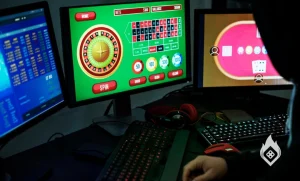



Austria has taken a significant step toward overhauling its gambling rules. The Ministry of Finance submitted the draft law to the European Commission on August 4, entering it into the EU’s Technical Regulation Information System. TThe submission triggers a mandatory three-month standstill period. During that window, the Commission and other member states can review the draft and raise concerns over state aid or single market rules. The law cannot be adopted until that period ends, though Austria’s parliamentary process can continue in parallel. The reform would end Austria’s online casino monopoly and replace it with a regulated multi-licence system under strict conditions.
What Austria’s New Licensing Rules Require
The key aspect of the new law is to scrap the single operator model that has governed the Austrian markets. Under the current systems, online casino-style games are reserved for one state-linked concession holder. The draft introduces an open licensing procedure for online gambling, allowing an unlimited number of operators to apply provided they meet the required conditions.
The proposed law has set high barriers to apply. Applicants must be structured as capital companies with a supervisory board and hold minimum share capital of 10 million euros. The draft also sets out governance requirements and anti-money laundering obligations. A new gambling authority would take over supervisory functions currently handled by the Finance Ministry.
The draft sets a hard cut-off. Operators currently serving Austrian players without authorisation must cease those operations by January 1, 2027 to remain eligible for a licence. When they cease their operations, they will be eligible for new licenses. Operators that miss this deadline will face an 18-month waiting period which increases to 24 months by the year 2030. Applicants must also satisfy all final Austrian court judgments obtained by players before a concession can be granted, addressing a long-running wave of player litigation against offshore operators.
The new law has enforcement tools such as payment blocking, blacklisting, and network-level blocking of unauthorized operators, which will be combined with huge penalties. The stated goal is to channel existing demand from the grey markets into supervised environment rather than to liberalise it.
The reform also changes how casino licenses are awarded. Casino licences would be capped at 13 and may be allocated in packages. Licensing authorities are instructed to prevent excessive competition between casinos and to ensure balanced geographical distribution, both framed as player protection measures.
How the Draft Strengthens Player Protection
Player protection is one of the most salient aspects of the new reform. Austria would introduce a national exclusion register for the first time, covering casinos, slot machine venues, and online gambling. The register will keep a track of operator-enforced bans and voluntary self-exclusion, preventing excluded players from moving between operators or product types to get around constraints. Deposit limits will be fixed for digital gambling and slot machines.
The draft sets a lower deposit limit for young adults aged 18 to 26, reflecting that group’s heightened vulnerability to gambling-related harm. It forms part of a wider set of age-sensitive safeguards, including advertising restrictions and enhanced identity verification. Slot machine rules are also changed. The reform proposes reducing maximum stakes, slowing game speeds, and introducing a mandatory cooling-off period after 90 minutes of play. All of these rules will be under supervision through a new digital platform, which will also enforce a central, operator-independent deposit limit across the online market.
Austria’s reformed gambling market could open in October 2027, with online concessions for five years and renewable up to 10. The draft also applies a 45% tax on gross gaming revenue. Whether the framework survives the Commission’s review intact will determine how much of it reaches the statute book.
You can also read – Nysos Retires Sound and Will Stand at Ashford Stud in 2027